


Latitude 2026
Thursday 23rd to Sunday 26th July 2026Henham Park Estate, Beccles, Suffolk, NR34 8AN, England MAP
£320 adult camping
It was twenty years ago today…
Actually, this twentieth edition is twenty-one years later due to covid, though in some ways it feels like five minutes. In that time the festival has waxed and waned, its personality shifting with its demographic and its offering shaped by the harsh climate, both literal and financial, within which it has had to operate. Yet take a look at a site map of 2007 (the earliest I could find) and it's surprising how little the basic layout has changed. The Second Stage, the Comedy Tent, Sunrise and the Woods are where they have always been. Old lags will quickly point out the main stage was under canvas in the first year, the iconic open-air stage born of a near mythical last-minute gust of wind. And yes, Music & Film, Cabaret, Poetry and the Lake Stage have long gone. Literary has morphed into the Listening Post via the Speakeasy, the Theatre has shifted location, and we now have the Alcove, the Lavish Lounge, the Trailer Park, and the Apollo. Along the way the Outpost, the Wellcome Trust, the Town Hall, Radio 4, Live Art House and an ill-fated dining experience all had their time in the sun before fading from the memory.
As a nod to those bygone days, wouldn't it have been lovely to see the return of those fantastic opening ceremonies that seemed to bring everyone together. Sadly, I imagine tight budgets made that impractical, so instead The Listening Post turned into the Poetry Tent for one night only, including the return of its curator, Luke Wright. I managed to bookend my evening with four out of the twelve on offer - the whole thing went on for nearly four hours - but many of the usual suspects did a turn. John Osborne, Holly McNish and John Cooper Clarke were among the inestimable poets I missed, in an evening that kicked off with Tim Clare embarrassing his daughter with poems about her, after which Hannah Jane Walker rattled through iniquities of negativity, weight loss and mortgage applications. The evening finished on Salena Godden's heartfelt mix of social justice, love and humanity, after which Luke Wright sent us off with his univocal whimsy. I find this is Wright's thing. His strict skill is gripping, his crisp wit is thrilling, his filth is disinhibiting. Trust me – its harder than it looks.
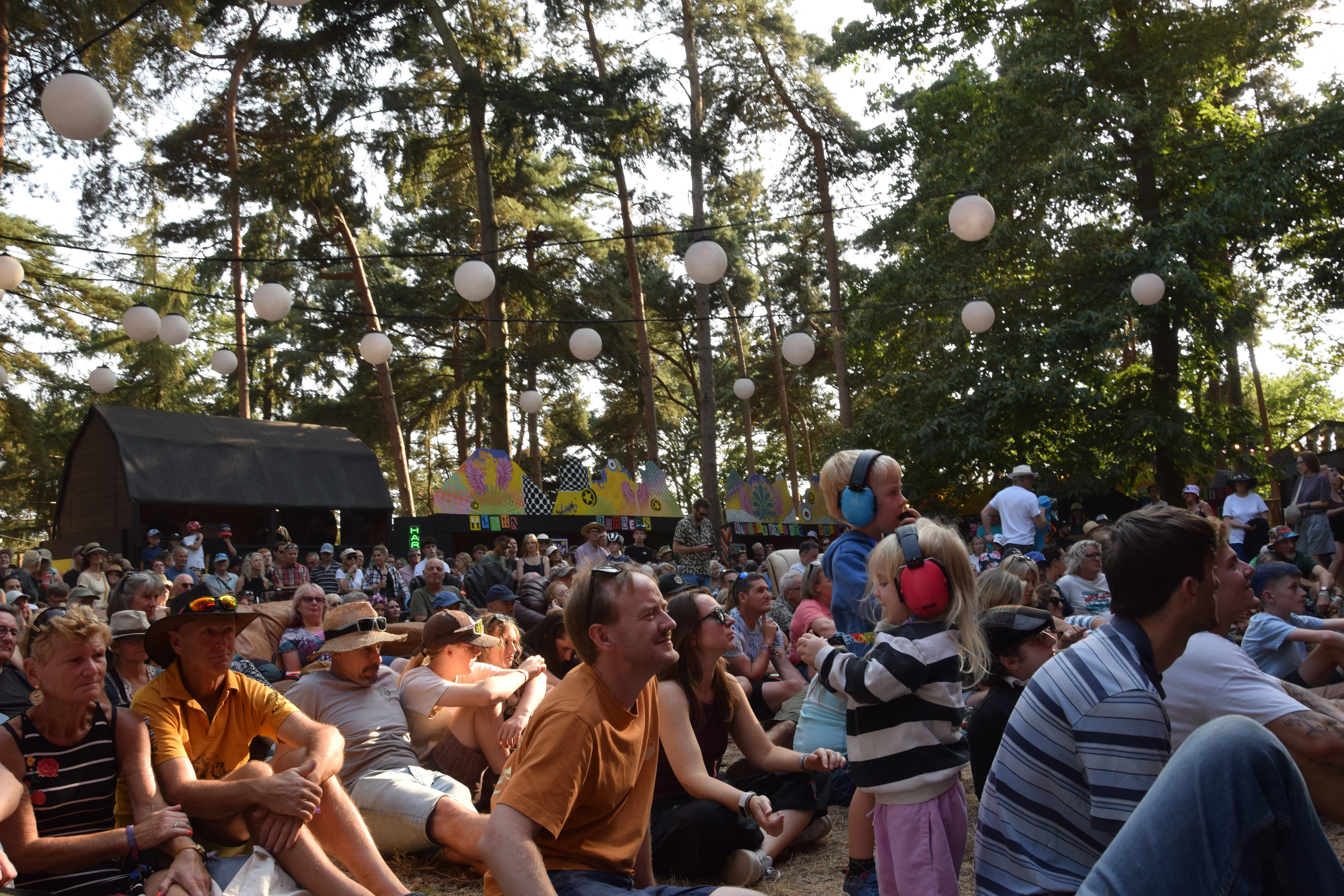
Before the poetry, Neil Cowley Trio had stunned the Lavish Lounge audience with their musicianship and genre hopping precision, while sandwiched in-between was Robin Ince's science-fiction show, Giant Killer Crab Musical, an affectionate parody of the truly terrible novels of Guy N Smith. Joining him on stage for his unrehearsed car crash of a show was a cast of several that included Reece Shearsmith, Josy Long and Jakko Jakszyk from King Crimson. You couldn't make it up and generally they didn't, stumbling from one missed cue to the next mis-typed page. All purposefully done by Ince, of course, in the manner of a modern day Bruce Forsyth. The only thing he concealed was just how cleverly he mimicked Smith's tortured prose.
The evening concluded with Dennis Bovell and the Instant Dub Scorechestra scoring Bride of Frankenstein. Encouraging fellow musicians to join in can be filed under "Seemed like a good idea at the time" as they took up too much of the arena, while contributing too little to the noise. There was precious little room left for an audience. It was only towards the end of the performance, when most had lost patience with craning their necks, that I was reminded just how good James Whale's film is.
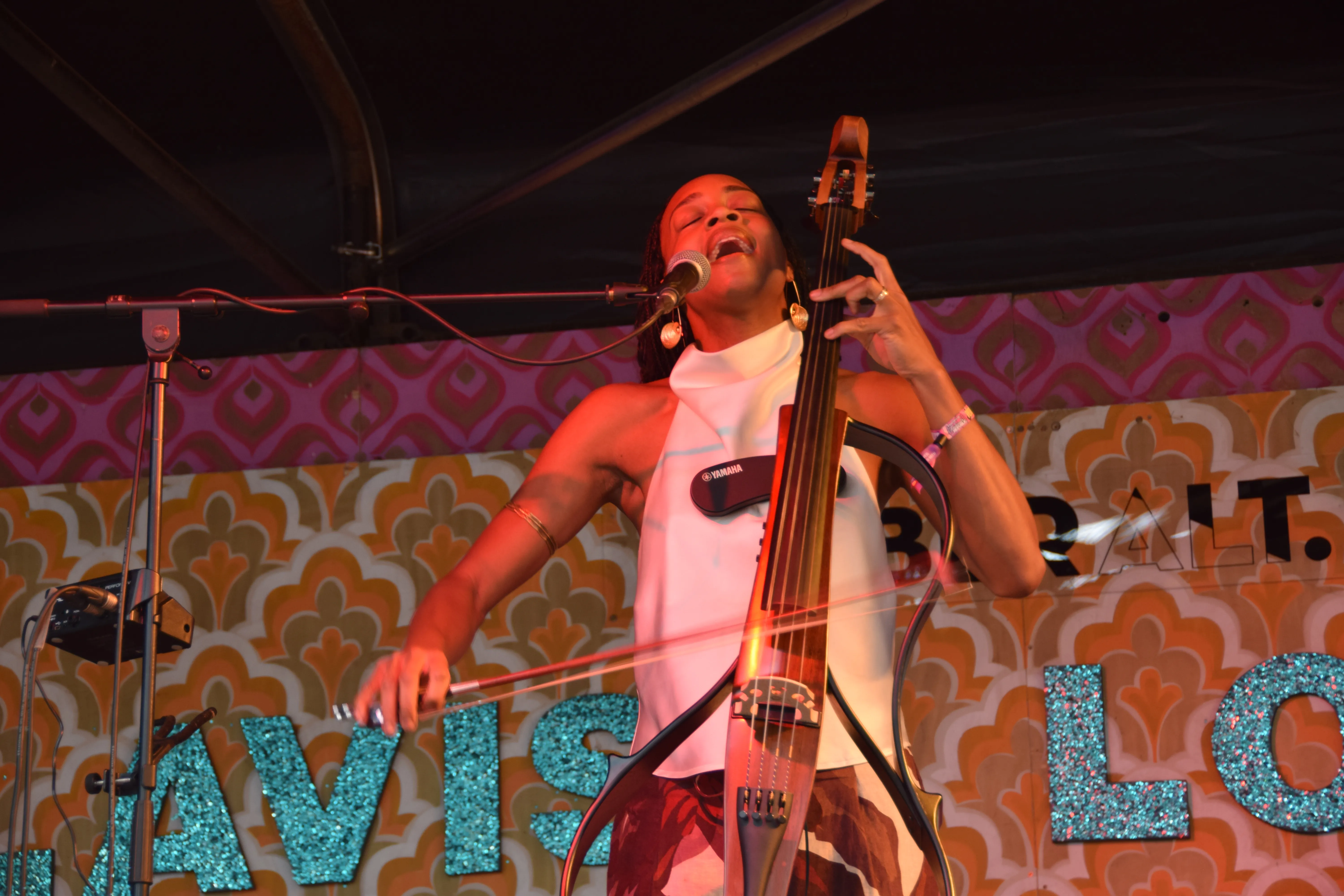
Friday started off with the frankly underwhelming Ocean Songs on the Waterfront Stage. Set out into the lake and open on all sides, it's proved tricky to host music exposed to the elements, so perhaps that was the issue. In any event, it far better served what the stage does best which is showcase contemporary dance. Still Pointless: BalletBoyz at 25 must rate as one of the finest examples of duets I've seen on that stage in the twenty years I've been going. Just as exemplary was Ayanna Witter-Johnson that I managed to squeeze in between. Blessed with stunning vocals and maestro cello playing, she demonstrated with a set largely of her own making (with a Police cover thrown in for good measure) just how much the Lavish Lounge raised its game this year.
The bookshop is an interesting venue that could be so much better, by simply setting out some chairs. As it is a free-for-all creates a lock-in that isn't conducive to casual browsing. Had it been easier to get in and out of I may have given the uneasy chat between Angela Harding and Tor Falcon a fairer try. Trying is what Martha Carney did, but chatty Angela and shy Tor did not an easy conversation make. I rather regretted cutting short my time with Diles Que No Me Maten on the main stage, shortly after which I’m told they just got going.
Adult DVD are a genre-blurring band whose perceived influences depend very much on the eye of the beholder. The Sleaford Mods if fronted by Underworld’s Karl Hyde is how I'd describe them, but there were retro influences aplenty tucked into their set. They energised the marvellous Sunrise stage, a venue nestled deep in the woods in a way that means you're never going to fall across it by accident. Either you knew the band or trusted the stage.
In The Listening Post, four successful authors described the trauma of being edited a bit, the poor loves. The audience were duly thanked for their empathic support, whereupon Robin Ince (the most grounded by far) delicately suggested that some of us, at least, may have simply been booking their seat for John Cooper Clarke. The Bard of Salford was on good form, and we even got a few new poems smuggled in between the hit singles. No surprises, though - he's been telling that occasional table gag for at least the last ten years.
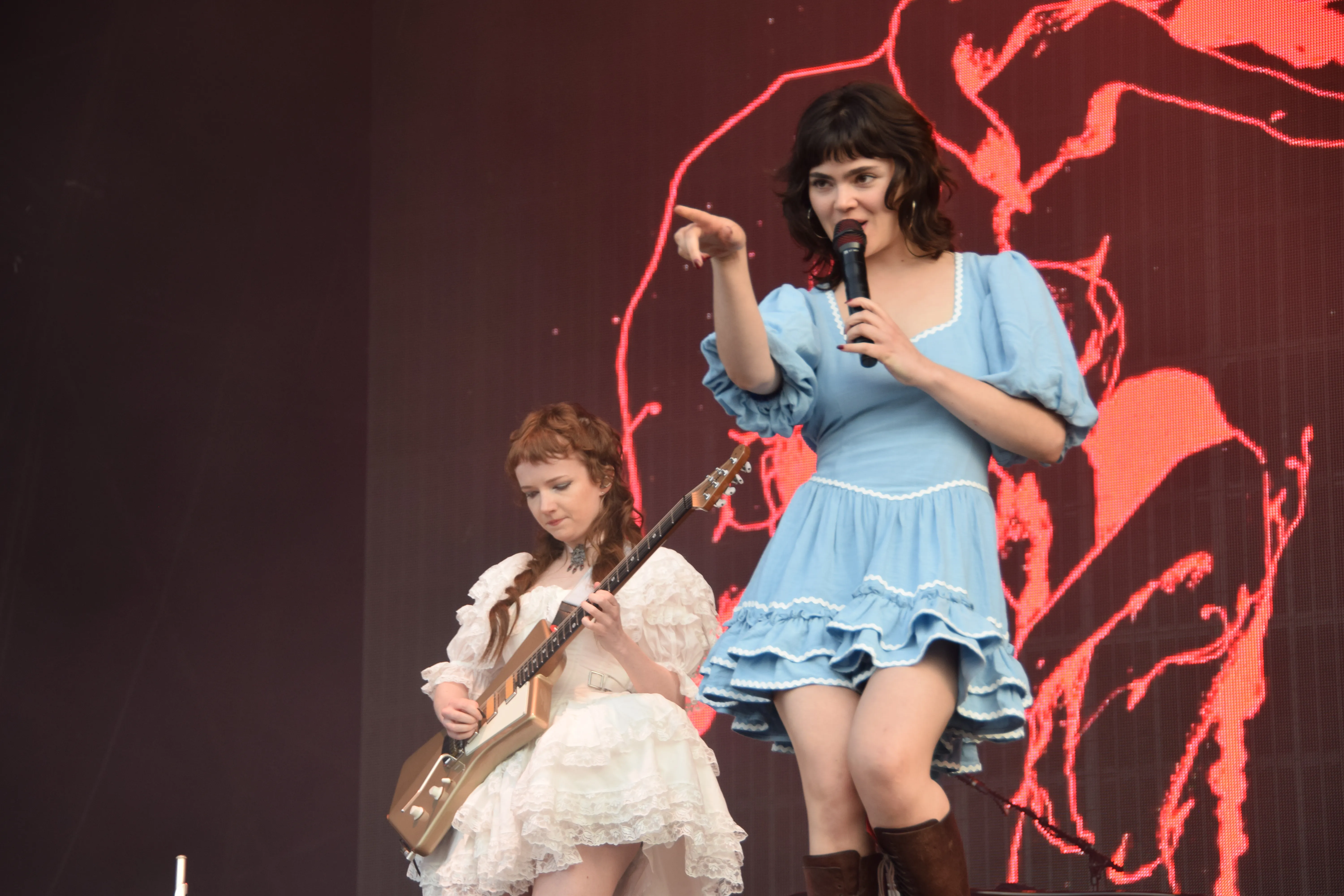
Disappointed that the preview of the new David Byrne film had been shunted to the early hours, I instead braced myself for The Last Dinner Party. Having previously determined them "nothing special" while watching them, bottom of the bill, in the rain, at EOTR, I was looking forward to having that assessment confounded. To my mind, the debate over Abigail Morris's theatrical hyper-femininity and coquettish flouncing about - is it an ironic reclamation of the male gaze or serendipitous recasting of sexualisation within the music industry - is less important than the songs she sings, which are forgettable even while performed. Admittedly, this sort of anodyne pop, even when dressed up (literally in the case of TLDP) with bogus significance, has its place and its admirers, but it was clumsy scheduling to have Alessi Rose as the second stage alternative. Her confessional catchy melodies combined with Gen Z relationship angst had me running out the tent screaming but in hindsight, at least she doesn't posit a greater significance.
That said, perhaps it's the toxic masculinity running through my veins that was just marking time, impatient in a uniquely heteronormative way, that any time David Byrne wasn't on stage was time wasted. If you are a fan, this was a world class performance, matched only by the last time I saw him perform. Dispensing with any instrument that restricted movement, his cast of musicians prowled, danced and engaged with each other in a way that was almost balletic while the Byrne songbook was mined for classic after classic, a judicious sprinkling of Talking Heads numbers dotted in and around his solo material. Afterwards, I did go see the film, along with maybe twenty other people, and got to see a version of the performance up close and personal. Not quite this century's answer to Stop Making Sense, it was fine and would have been enjoyed by so much more if not on at an ungodly hour. What a silly way to squander a premiere.
Saturday morning had me seduced by an intriguing premise in the Theatre, a venue that grimly holds on tight to its place at Latitude. An excellent performance space and faultlessly run, should it ever go the way of Film and Cabaret, it would surely herald a one-way turning point. Unfortunately, the interesting idea - of the same event perceived differently - was poorly expanded upon. Anatomy of Survival was a slim concept stretched to an hour and performed by decent dancers who were nonetheless ill equipped to theatrically project without mics. What a pity, as the underlying message - that one person's belligerent customer was another's troubled soul - was one worth sharing in these increasingly polarised times.
Gareth Malone is not a man who could be accused of causing polarisation, except perhaps in his musical tastes. Effectively a jukebox selection of music that has been performed at Latitude over the last twenty years I can't say I favoured all his choices, but only the hardest of hearts would have remained unsoftened by a cross section of Latitude punters singing their, presumably already softened, hearts out.
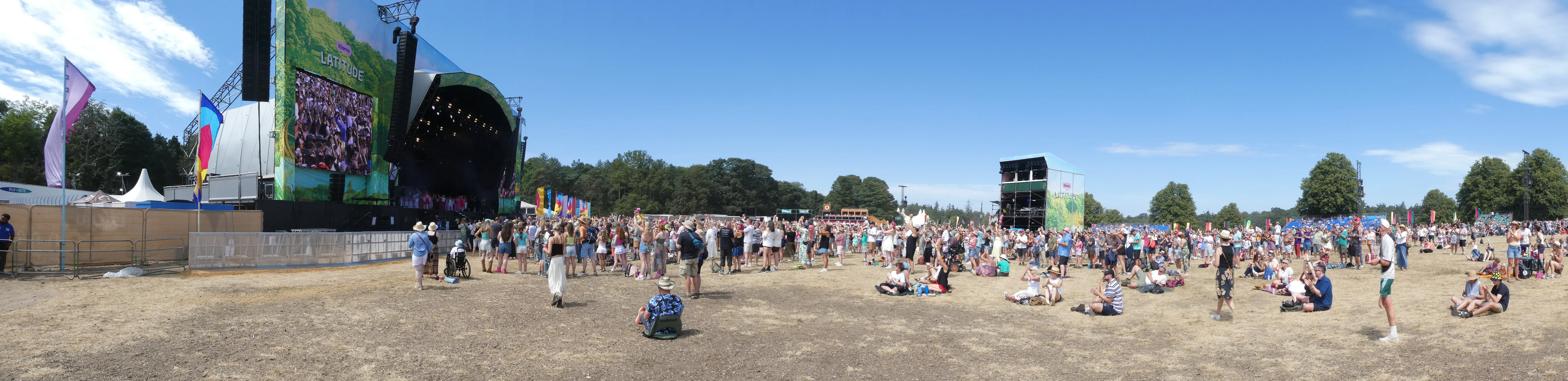
Afterwards, it was time for the annual attempt to enter the ridiculously popular Comedy Tent. To give Melvin Benn his due, every year he seems to make it bigger, but still it fills. The solution, of course, is to put fewer acts with a TV profile, but easy to say when the star turns featured are one of the festival's main USPs.
Marcus Brigstock and Lenny Henry both had things to say about growing old. Otherwise they were poles apart, with Brigstock at his vituperative and scabrous best while Henry's routine felt dated and self-regarding. When it's so hard to get in the tent, it's tempting to stay on principle, especially as Henry is obviously a nice bloke. But there was no pleasure to be had from hanging around, watching him struggling to get laughs, especially when the work of a supposed literary genius awaited.
I know Samuel Beckett won the Nobel Prize for literature, but then Kissinger won the peace version, so it's no guarantee of quality. Keen to stress test my prejudices, I committed to seeing Krapp's Last Tape. I thought it interminable, though I suspect this was mostly due to Stockard Channing's direction and/or David Westhead's acting. Lacking confidence in audience patience they rattled through it at pace, clocking up only 40 minutes, losing coherence and pathos in the process. And that means I can't fairly criticise the play itself without seeing the damn thing again.
Who would have thought that a group of people saying nice things about someone else could prove a festival highlight? Following the death of Sam Neill, Robin Ince reshuffled the Apollo stage, gathered together the likes of Mark Kermode and Kerry Fox, and talked about what a decent bloke Neill was. Simple, moving and occasionally funny, it was a delightful celebration of the man.
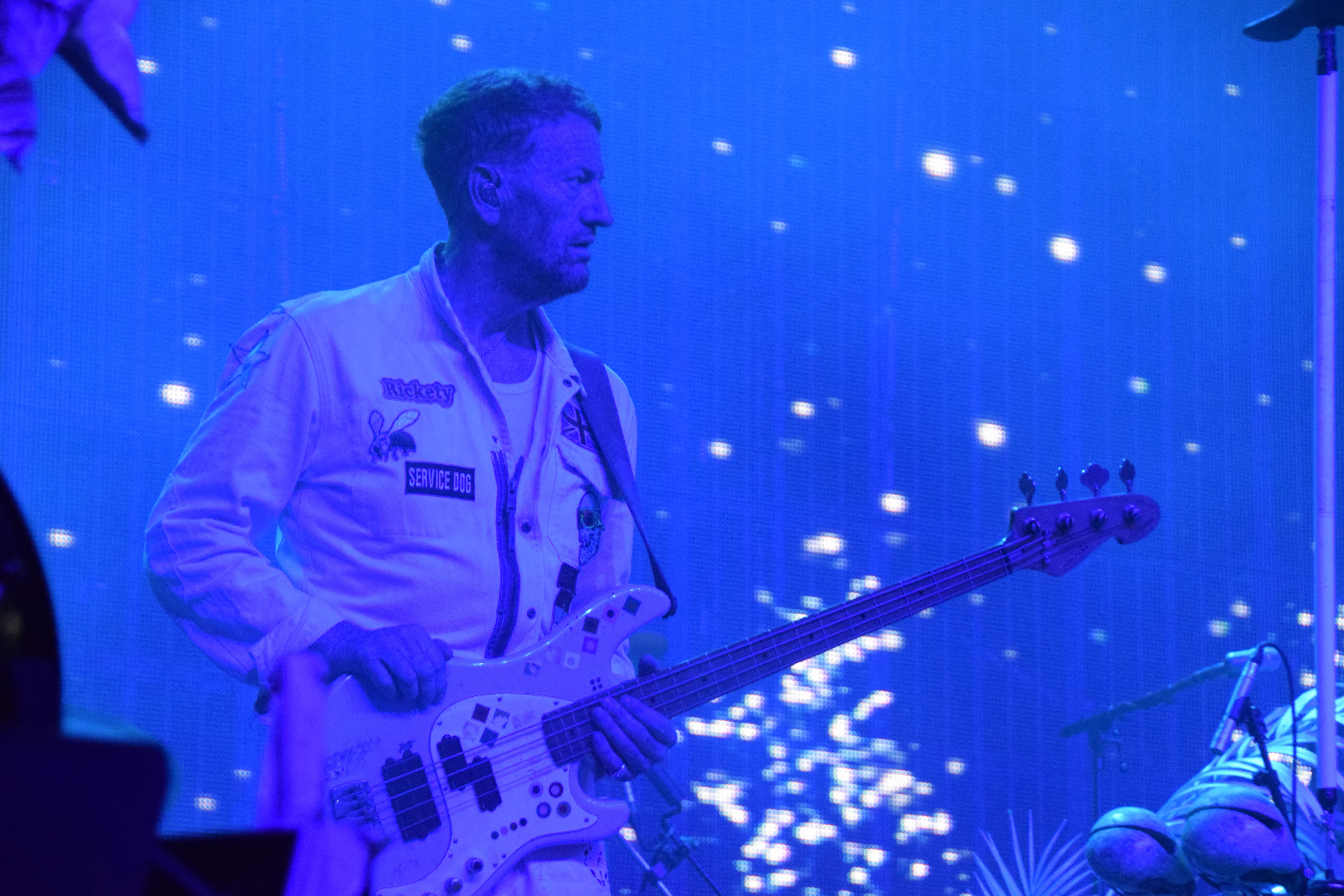
Who would have imagined that after 21 years, The Beta Band would reform? Beloved by many but never very successful the first time around, their idiosyncratic blend of psychedelia, folk, and dreamy grooves didn't easily fit into anyone's record collection. Unaware they reformed last year, I wasn't sure what to expect, but what emerged was curiously timeless and far more interesting than the heritage act I was expecting.
After a brief return to the Apollo stage to witness a Nerd-Off between Ince and Shearsmith, jousting over obscure horror film soundtracks - is there any other type - it was back to the perennially reliable Sunrise for Getdown Services. This was partly to avoid the huge crowds amassing for Teddy Swims, and partly because I vaguely recalled previously seeing and enjoying them, so expectations were measured. Perhaps measured are the best sort of expectations, as they left me unprepared for a sweaty, overweight, topless duo pumping out an infectious mix of danceable punk leavened with genuine wit and good humour. Chaotically funny enough to engage, but secretly no slouches musically either, they were rewarded by the best audience reaction of the weekend. A joint celebration, if you'll excuse the pun, of swimming against the tide.
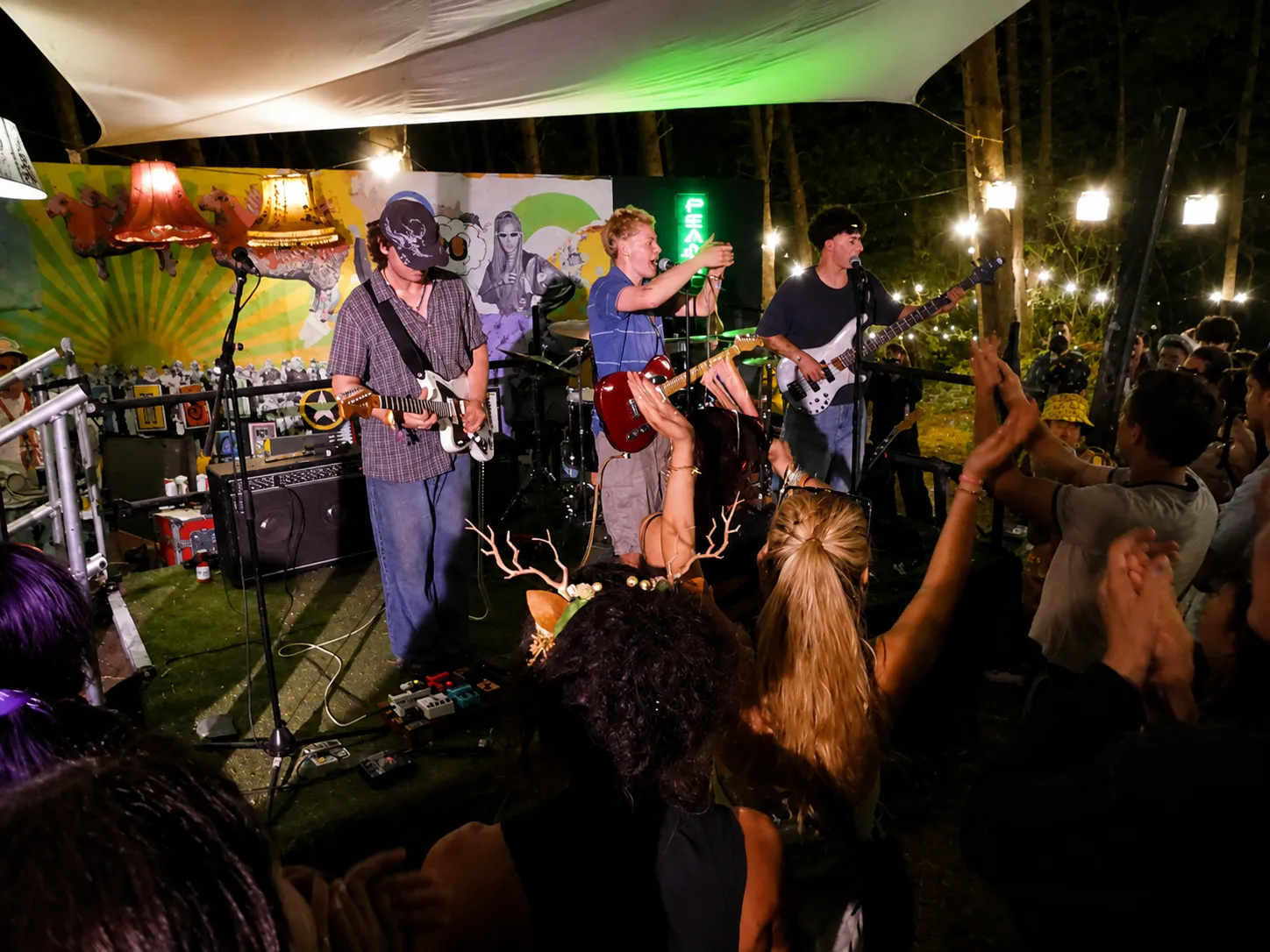
My night finished at the Lavish Lounge, born out of curiosity. The special guest turned out to be Professor Green, but it was the Tiny Stage next door that really had heads turning. Billed as a venue hosting up and coming talent, it closed with a performance by a preposterously talented group of late teens calling themselves the Sons of Saints Collective. The band apparently played in 2024, so they've been plugging away for some time now, as was evident from their tight indie influenced sound. I got the impression they have tailored their music to suit live performance, with frontman and lead vocalist Ed Hughston delivering a particularly assured stage presence. With Sam Jurkiewicz on guitar, and twins Nino and Alfi Cadillac providing rhythm they brimmed with justified confidence playing a set composed largely of their own music. We did get the second Police cover of the weekend thrown in, and it was fine, but I'd suggest they stick to their own material. It simply didn't need the buttressing of the familiar to get the crowd going. When calls for an encore came, it was more of their music the audience wanted to hear.
Sundays are always tinged with melancholy that we are approaching the end, while simultaneously acknowledging we've just about had enough. Perhaps that's why I stuck to music - there's only so much talk you can take. Or perhaps it was the whiff of heritage that had me drifting back to the main stages. Everything Everything produced an opening set to be appreciated rather than loved, but thereafter we had nostalgia aplenty with Alex James's Britpop retrospective. Gary Stringer and Saffron were among the 90s stars that popped up to sing their own hits, accompanied by James's house band and string section. Best of all was Phil Daniels, doing a live rendition of his Park Life monologue.
In a touch of cheeky scheduling the excess of orchestrated pop was then contrasted with the raw energy of The Undertones, largely intact apart from Paul McLoone standing in for Feargal Sharkey. I'm not sure they were a good fit for this main stage, but they offered up a set list that went way beyond Teenage Kicks. Far better, I'd have thought, had they joined Peter Hook on the more intimate second stage. Performing with The Light for over 15 years, he looked both at home and defiant. These are my songs and I'm going to play them is the message, and while it may be a low bar, he has a better voice than Bernard Sumner.
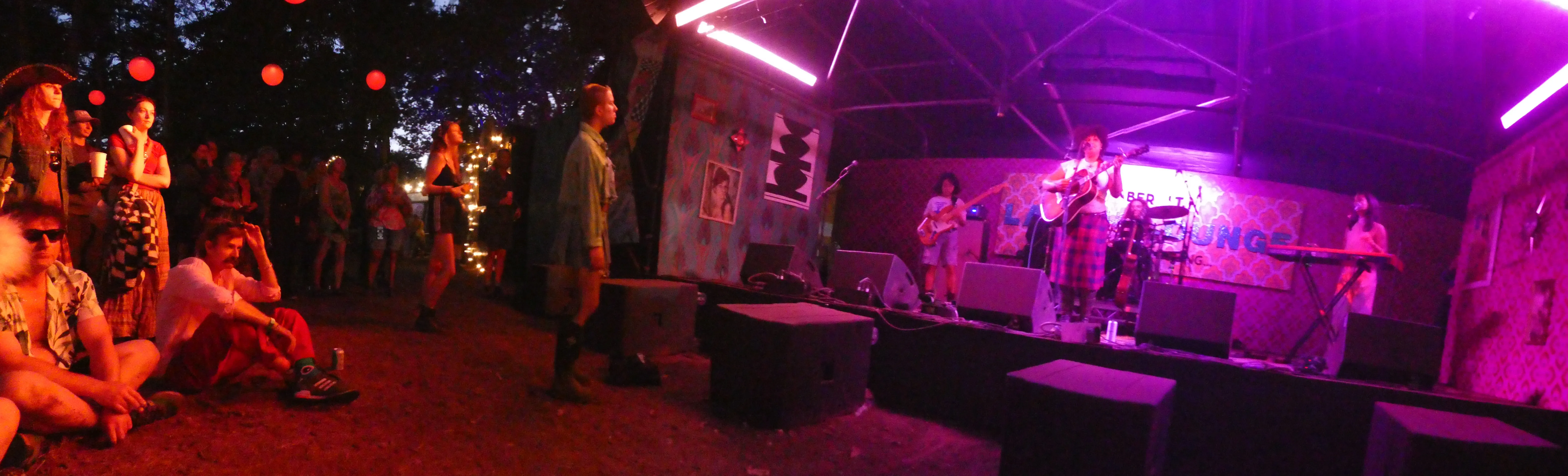
Had Mark E. Smith introduced a saxophone into the Fall, they might have sounded like the danceable post-punk offered by Deadletter. They were fine, but it was Ruti, whose stunning vocals made me late for The Flaming Lips, that will stay with me. Proving yet again that the Lavish Lounge delivered the best surprises, the siren call of her singing was irresistible, notwithstanding the inflatables I no doubt missed.
Wayne Coyne certainly knows how to put on a show. While the extravagance of The Flaming Lips looked to be constrained by performing indoors we still got the lasers, the confetti cannons, the weird creatures and his signature bubble. Not too many songs that stuck, mind you, but as a spectacle it couldn't be faulted.
Which leaves Snapped Ankles, back at a rapidly filling Sunrise stage, as folk realise it's nearly all over. Unlike the Undertones or the Flaming Lips, this is exactly the right stage for them, deep in the woods. A sometimes bizarre blend of krautrock and repetitive grooves, these are weirdos you can dance to, while shutting your mind to the harsh reality that the weekend flew by while you weren't looking.
So what have we learned over the last twenty years? Is it that festivals aren’t as good as they used to be? Latitudes personality remains elusive, and while it has shifted over the years, is probably closer to a slick entertainment machine than communal experience. But people will chat if you make the first move. They are reserved, not unfriendly, and might well be in one of the posh tents that cost a fortune. Don’t hold it against them – this might be the family holiday they can afford.
I can certainly point to things that have gone missing in action, and while the venue count is broadly the same, there’s no doubting music has dominated while the arts have retreated. Latitude has become a festival much closer to the norm, and that is a pity. But for all the variety presented in the past, it was really hard to actually get in to those poky venues back then. The program used to cost a fortune, now the schedule – which changes anyway – is given away on an app. The food is demonstrably better, and if you shopped around, surprisingly reasonable. As for the facilities, I can still recall, with a shudder, the distinctive clunk of the doors to the elevated toilets. What we have now are truly toilets of wonder with proper washing facilities including soap!
All these things matter, but surely what matters most – what is the wonder of wonders – is that it is still going while so many about it have fallen. If the price paid for that is a festival a few steps away from the ideal in the mind’s eye, I think we should be able to live with that.
Latest Updates
 Latitude Festival 2026 - The Review
20 editions on, Latitude's personality remains elusive
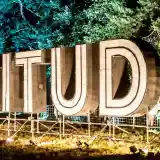 Latitude 2026
festival details
 Latitude 2026
line-ups & rumours
 Latitude Festival announces comedy line-up for 20th edition
Ross Noble, Jen Brister, and Jack Dee to headline comedy stage
 These Artists Are Headlining Latitude Festival in 2026
David Byrne, Teddy Swims, and Lewis Capaldi to headline 20th edition