


The total economic value of the UK's music industry last year grew 9 percent year-on-year to £3.8 billion up from £3.5 billion the previous year, according to a new annual economic study 'Measuring Music' published by umbrella trade organization UK Music, (here).
There overall results are as follows:
Music's economic contribution in 2013 as an economic measure of the value of goods and services:
• GVA (gross value added) of £3.8bn
• GVA up 9% year-on-year (£3.5bn in 2012)
• More than 111,000 full time jobs supported
• Music exports of £2.2bn
Measuring Music presents 2013 data for six thematic groupings that define the core music industry. These are:
• Musicians, Singers, Composers, Songwriters and Lyricists (£1.7bn)
• Recorded Music (£618m)
• Live Music (£789m)
• Music Publishers (£436m)
• Music Representatives (£80m)
• Music Producers, Recording Studios and Staff (£102m)
Jo Dipple, CEO of UK Music said: "We all know how amazing British music is. Now we can put a figure to its value. Last year its contribution to our economy grew by 9%. This is a big deal. We lead the world in song writing, composing, production, recordings and live performances.
"The Measuring Music study shows how important the industry is to the UK economy. The young bearded kids in the pub, making a racket on a Friday night, might just turn out to generate more revenue for HMT than a car manufacturer. But they need support to get there."
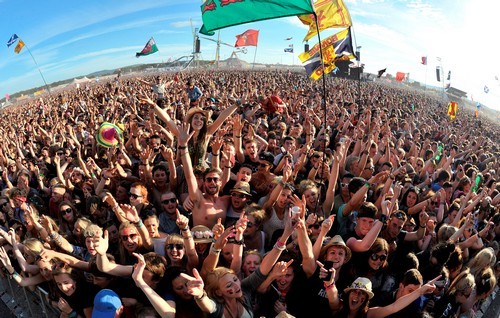
The live sector which includes festivals has, helped by good weather most of the summer, done well this year, generating value of £789 million up from £662 million in 2012.
The music rights sector generated £1.15 billion, breaking down as £618 million through exploiting sound recording rights, £436 million by exploiting publishing rights and £102 million for the creation of recorded content. The artist and songwriting community at large generated the most revenues, pegged at £1.7 billion.
The survey also reveals that the as well as an improvement in summer weather contributing to the growth in revenues, the slight upturn in the British economy and, in turn, greater consumer confidence, also greatly contributed.
The better provision for wider markets is also a factor with the survey revealing that better provision for the disabled reaping dividends for live events.
As an example the survey cites Latitude Festival, saying the festival has developed a loyal deaf and disabled customer base. Disabled ticket sales for Latitude Festival have increased year-on-year by 36 per cent, with ticket sales having tripled since 2009.
The report also indicates that attendance at live music events in 2013 may be seen as something of a bounce back to similar attendance levels achieved in 2011 after a falloff in 2012, a year which according to eFestivals' own figures saw 6.13% festivals cancelled, the highest in recent years since 6.79% in 2008.
The success of large scale live music events like Glastonbury Festival which returned after a year off help to explain the strong growth in live music that UK Music analysis has revealed. They found that the total box office takings for live music events in the UK grew by 26% during 2013 to over £1.2bn.
The economic growth that this increased revenue has created is shared right across the UK, with every region of the UK playing host to a large number of live music events in 2013.
Actual revenues from festivals is likely to be even higher as the report does not include revenues generated by what UK Music defines as the "wider music industry," such as security and catering at live events.
Last year the UK Music site produced another report, (here), which said they had identified that 6.5 million music fans attended a festival or gig in 2012, generating £2.2 billion spending in the process. The figure for 2013 is likely to be higher still.
eFestivals own data reveals that the the biggest areas of growth in number of festivals listed according to our records is the west of the country - with Wales seeing most growth, and both the South West and North West doing well also. London has seen the biggest reduction, with the number also decreasing in Yorkshire & the North East. Elsewhere numbers remain fairly constant.
The main area of growth in festivals has we can reveal been indoor winter festivals, going back a few year there were only ATP, and the Northern Soul type events, now there's hundreds of usually urban events held throughout the indoor season.
The full report can be downloaded here